看世界 | 全球最大!沪东中华27.1万方LNG船获四大船级社AiP认证
2023年9月11日
发布者:KnowMi 发布时间: 2026-01-28 02:01:20 点击量: 1157 来源:
09 11
全球最大!沪东中华27.1万方LNG船获四大船级社AiP认证
World’s largest LNG carrier, developed by Hudong-Zhonghua Shipbuilding Group, wins approval from major maritime classification societies
来源:globaltimes
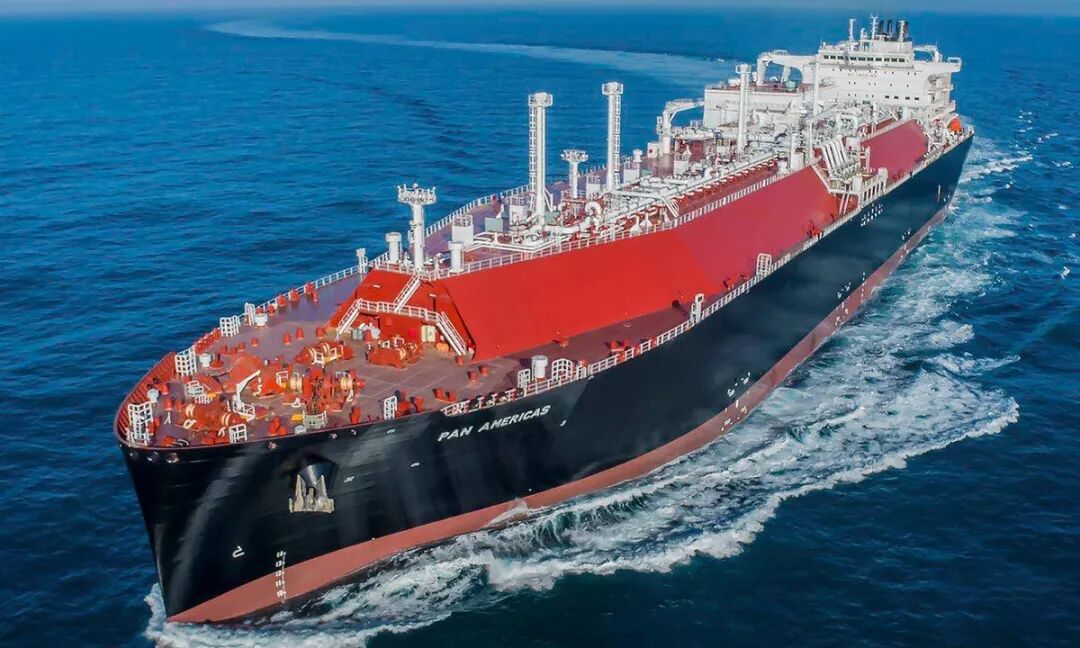
近日,沪东中华造船(集团)有限公司开发设计的全球最大型液化天然气(LNG)运输船同时获得了美国船级社(ABS)、英国劳氏船级社(LR)、挪威船级社(DNV)和法国船级社(BV)国际四大船级社颁发的原则性认可(AiP)证书。这艘“巨无霸”总长344米,型宽53.6米,采用5舱方案,最大舱容达27.1万立方米,其运载能力比常规的17.4万立方米大型LNG船高出了57%。据测算,该船一次可运输1.55亿立方米天然气,能够满足上海市470万户家庭一个月的用气需求。27.1万立方米超大型LNG运输船虽体型巨大,却具有卓越的船岸兼容性,可通达全球各大洲70多个岸站,覆盖各大主流航线。
The world's largest liquid natural gas (LNG) carrier developed by China's Hudong-Zhonghua Shipbuilding (Group) under the China State Shipbuilding Corporation has won approval in principles (AiP) from the American Bureau of Shipping (ABS)、 Lloyd’s Register (LR)、 Det Norske Veritas (DNV)、 Bureau Veritas (BV). The LNG carrier design is 344m long, has a breadth (moulded) of 53.6m and has five cargo tanks. The LNG carrier has the world's largest capacity of 271,000 cubic meters, about 57 percent more than regular LNG carriers with maximum capacity of 174,000 cubic meters. The carrier can transport 155 million cubic meters of natural gas at a time, which can meet the gas consumption demand of 4.7 million households in Shanghai for one month. The large capacity doesn't affect the LNG's mobility, which is adaptable for 70 global shore stations and major sea routes.
迈耶集团推出全球首个浮式邮轮码头
World’s first floating cruise terminals unveiled
来源:cruiseindustrynews
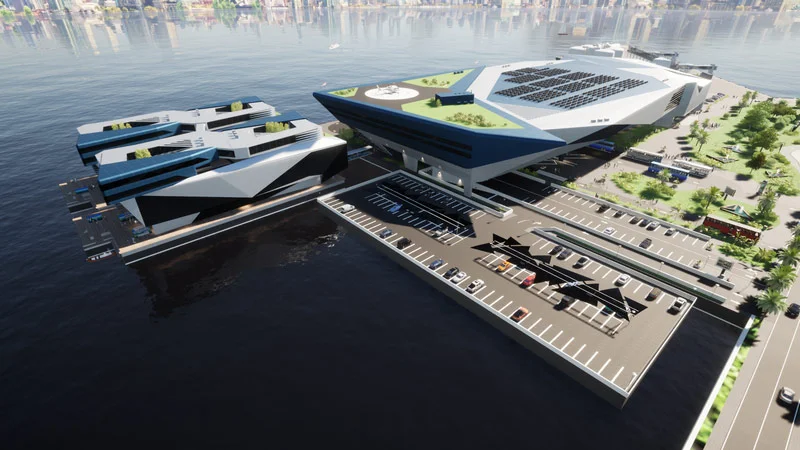
德国迈尔(Meyer)集团旗下的MEYER Floating Solutions公司推出了全球首个浮式邮轮码头。该公司为港口发展提供了新的解决方案,更注重其灵活性和可持续性。全新的浮式邮轮码头不仅解决了港口新码头基础设施建设薄弱的问题,还具备多功能性——其模块化结构使得码头可根据需要扩展或搬迁。浮式码头所有的模块都可以在如造船厂等类似的工厂中制造,能够最大限度地减少码头现场的施工工作,并通过固定系泊装置等确保安全。码头在长约410米、宽约265米的占地面积内进行了合理规划,设计的泊位长度在205米到320米之间。码头还可以与其他模块集成,搭建酒店、停车场、能源供应中心和购物中心等。
MEYER Floating Solutions, a division of German MEYER Group, has unveiled the world’s very first floating cruise terminals. MEYER Floating Solutions has reimagined port development with a focus on flexibility and sustainability. This novel approach addresses the needs of ports lacking significant infrastructure while simultaneously providing the versatility to expand or relocate terminals as needed. Floating solutions up to full terminal size can be manufactured in a factory-like environment such as a shipyard, thus minimizing local site work while maintaining safety through fixed mooring arrangements like mooring dolphins. The designed pier options range from 205 to 320 meters in length, optimizing utility within a compact footprint of 410 meters in length and 265 meters in width. The terminals are available in a wide range of designs that can be integrated with complementary modules, including hotels, parking facilities, energy supply centers and shopping complexes.
DNV:航运业“脱碳”恐存在碳中和燃料短缺问题
Shipping industry faces challenge of securing green fuel supply, DNV says
来源:gcaptain
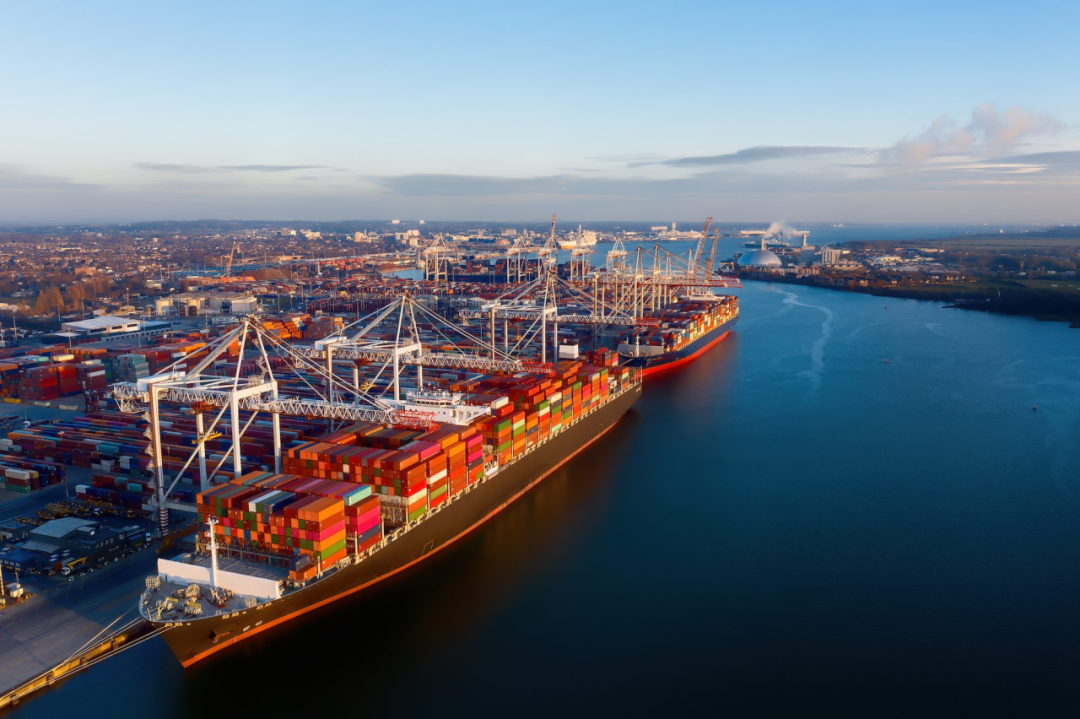
挪威船级社(DNV)预测,未来海运业的碳中和燃料供应很可能不足,实现新的2030年海事减排目标任重道远。根据DNV的数据,海运业需获得全球碳中和燃料预计供应量的30%至40%,才能在2030年,满足每年1700万吨油当量 (Mtoe)零碳或净零碳燃料的预期需求,但这绝非易事。因此,DNV建议,业界应考虑所有可行的减排措施,包括采用空气润滑系统和风力辅助推进系统等能源增效措施,而不仅仅是局限于替代燃料。此外,DNV还发现,燃料技术转型已经开始,能够将液化天然气、液化石油气或甲醇作为动力的双燃料船舶,其订购吨位占到了总数的一半,而去年只有三分之一。对于已投入运营的船舶,目前有6.5%的吨位可以使用替代燃料,而去年这一比例为5.5%。
The shipping industry will struggle to secure enough supply of carbon-neutral fuels to meet the new 2030 maritime emission targets, according to classification society DNV. But meeting emissions targets won’t be so easy. The maritime sector will require 17 million tonnes of oil equivalent (Mtoe) annually by 2030, representing a staggering 30-40% of the projected worldwide carbon-neutral fuel supply, according to DNV. DNV suggests that the industry should consider all alternative approaches to reducing emissions, including air lubrication systems and wind-assisted propulsion beyond fuels alone. DNV’s report also finds that the fuel technology transition is already underway. Half of the ordered tonnage is capable of using liquefied natural gas (LNG), liquefied petroleum gas (LPG), or methanol in dual-fuel engines, compared to one third of the tonnage on order last year. Looking at the existing fleet, DNV reports that 6.5% of tonnage for ships currently in operation can operate on alternative fuels, up from 5.5% last year.
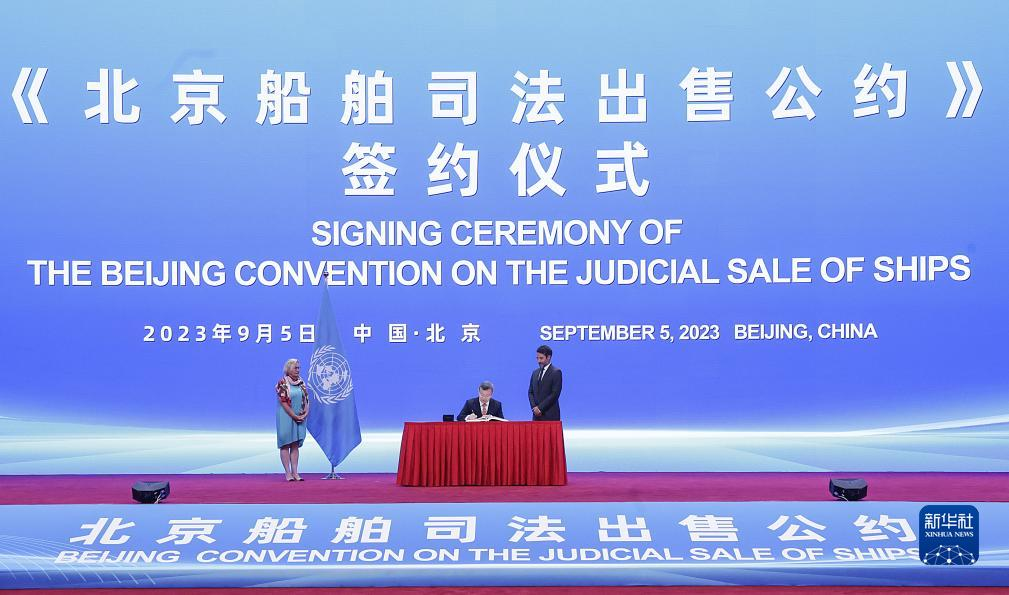
填补司法空白!《北京船舶司法出售公约》在京签署
UN convention on judicial sale of ships signed in Beijing
看新闻丨学英语
frame n. 肋骨
美 /frem/ 英 /freɪm/
“Frame”(v.)词源同from,源于日耳曼语,在中古英语早期指“建造,塑造”,后衍生出名词frame,在中古英语晚期指“ 制作建筑物的木制部分(框架)”
web frame 强肋骨
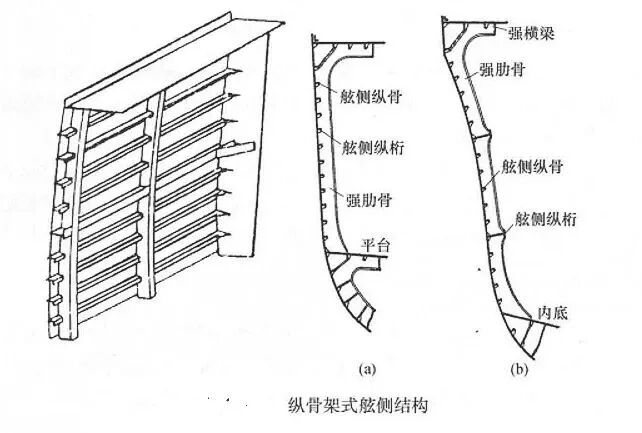
船舶肋骨是构成船体骨架的重要组成部分,它承担着支撑船体结构、分担船舶荷载、增强船体强度和刚度的重要功能。船舶肋骨通常由纵向肋骨和横向肋骨组成,它们相互衔接、相互支撑,形成了船舶结构的基本框架。
beam n. 横梁;船宽
美 /bim/ 英 /biːm/
“Beam”源于日耳曼语 baumaz “树”,到10世纪后期也指“椽子、柱子、船木”;“横梁”这一船舶术语最早出现于13世纪初,也指“船的最大宽度”。
web beam 强横梁
横梁是设在甲板或平台之下各肋位上的横向骨材的统称。它的主要作用是支撑甲板,将甲扳的横向载荷传给舷侧和甲板纵析,以保证甲板结构的强度和稳定性。根据尺寸的大小和位置分为普通横梁、强横梁、半梁、舱口端悬臂梁等。

点击图片,报名参加论坛
文案:朱智凤|谢坤烜
编辑:卢梦轲|施蔡涵
新闻来源:gcaptain/Chinadaily/
globaltimes/cruiseindustrynews
公司:宁波蓝智海洋科技有限公司
网址:http://www.know-mi.com/